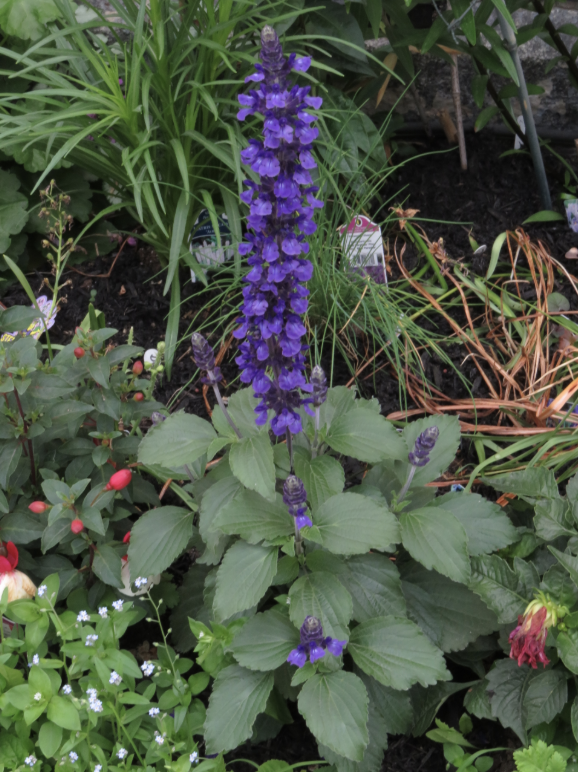
Salvia divinorum is an incredible herb. It was originally used by the Mazatecs in Oaxaca, Mexico. It is related to other Salvia species like Salvia officinalis, but Salvia divinorum is very different. Salvia divinorum produces psychedelic effects at high doses through the effects of salvinorum A, a substance that has been studied extensively as a medicinal agent with powerful healing effects on the body as a whole.
Researchers at Johns Hopkins Hospital say that Salvia divinorum, “…is unlike anything that exists.” Salvinorin A is the most powerful psychedelic substance on earth and, as a whole plant, Salvia divinorum can heal some of the more difficult systems of the body like the gut or the nervous system. In terms of nervous system health though, scientists have noted that Salvia divinorum may be able (through its salvinorin A content) to heal diseases involving distortions in the perception of reality. Some of these diseases include:
- Schizophrenia
- Dementia
- Bipolar disorder
- Alzheimer’s disease
- Parkinson’s disease
- Lewy body dementia
- Frontotemporal dementia
- Anorexia
- Bulimia
- More…

Click here to schedule a health coaching session with us.
Though patients who work with full doses of Salvia divinorum report that they completely leave this reality and go to another reality where they interact with other people or other entities, studies indicate that there are no adverse effects associated with Salvia divinorum whether it is given as a non-psychedelic microdose or as a full-dose that produces a reality-changing “trip”. As a kappa-opioid receptor agonist, salvinorin A is able to work with the kappa-opioid receptors without causing addiction to (essentially) help a person feel what’s being felt in the body but pass these feelings through to the left hemisphere of the brain so that the material can be processed logically. The theory that we present here is based on trauma-informed therapy and models set forth by Dr. Peter Levine. Essentially, if the body (which might be conceptualized as the right-hemisphere of the brain) is feeling a certain discomfort, but it cannot communicate about that feeling with the left, logical hemisphere of the brain (because the feeling doesn’t match up with Consensus Reality), you can either work with a sacred medicine like Salvia divinorum to discover the logic of the feeling (which might usually be described as “dysphoric”), which will give you the words and metaphors to describe it to another person within the context of Consensus Reality, or you can take something like kratom / Mitragyna speciosa to dampen the physical feelings and partially stimulate the kappa-opioid receptors for pain relief and relief from dysphoria.
When a person takes a full dose of Salvia divinorum, they often feel a tugging sensation from behind, like they’re going to fall over backward (even if they’re lying down). We think of this tugging sensation as a part of the soul leaving the body (just a part, not the entire soul). The patient may then enter an alternative universe and experience themselves and other people in paradoxical or sometimes strange ways. This experience can be described to him or herself and to another person in story / narrative form, which might be likened to fleshing out a feeling that’s been in the body for quite some time. The patient might not have talked about the feeling because they lacked the words or a sense of safety in describing the feeling because the feeling didn’t match up with Consensus Reality.
Meanwhile during a Salvia divinorum “trip”, in Consensus Reality, the person’s body might be moving around and they may speak and act out the other reality that they’re experiencing. For this reason, a trip-sitter is always necessary for a patient who’s working with full-doses of Salvia divinorum, but the main takeaway here for readers is the idea that Salvia divinorum produces a state wherein a patient is speaking or behaving in a “demented” or “psychotic” way, as though they’re interacting with a different reality that’s separate from Consensus Reality using a separate soul-part or a separate part of their energy to do it.
The mu-opioid receptors are the most famous opioid receptors that can be activated to produce a state of pain-free euphoria. But the kappa-opioid receptors are the part of the opioidergic system that produces states of “dysphoria”. While euphoria might involve a sense of floating or intense joy or relief, dysphoria might be conceptualized as the opposite type of experience. In a dysphoric state, a person might feel horribly awkward or they might feel a profound sense of impending doom. Dysphoria can produce a state of “psychotic” anger that’s not based on anything that’s going on in reality. Dysphoria is one step away from dementia or psychosis in that the person who experiences dysphoria is still aware of the fact that their feelings don’t match up with what’s going on in Consensus Reality.
Interestingly, though, kappa-receptor stimulation produces pain relief. Indeed, while total mu-opioid receptor activation produces a euphoric, pain-free state, with kappa-opioid receptors, activation is a pain-relieving experience that can also relieve dysphoria. Like Salvia divinorum, the plant known as kratom / Mitragyna speciosa activates kappa-opioid receptors too to produce pain relief and a relief from dysphoria. Kappa-opioid receptors seem to produce pain and dysphoria in response to inactivation or situations in which the body is not producing dynorphins, the endogenous kappa-opioid receptor agonists that normally interact with our kappa-opioid receptors. Dynorphins are released, for example, as a part of a “runner’s high”.
So, practically speaking, patients with dementia or psychosis can benefit from working with a kappa-opioid receptor agonist (kratom or Salvia divinorum) that stimulates and activates the kappa-opioid receptors. In those patients, it can be beneficial to work with a plant medicine that produces partial stimulation (mitragynine) or full stimulation (salvinorin A). We don’t know exactly why these medicinal agents can relieve dysphoria or pain, but if we think of dementia or psychosis as states in which kappa-opioid receptors are “open” or “inactivated”, leaving these receptors vulnerable, perhaps to something that can interact with those receptors “energetically” to produce psychotic or demented states, the idea of working with a kappa-opioid receptor stimulator makes more sense. In order to overcome dysphoric states including psychosis or dementia, it might be necessary through direct, personal experience to find out what types of energies are interacting with your kappa-opioid receptors to produce psychotic or dementia feelings. By experiencing the story and the characters involved in the dysphoria directly, through a Salvia divinorum trip, you are no longer prey to those energies. One important rule in trauma-release when working with the sacred medicines is that once you’ve put an awful feeling into words, the feeling is no longer alone…it has words. The feeling is like a vulnerable child by itself, but by putting the feeling into words simply to describe it fully and accept it completely, you are parenting yourself and giving the feeling permission to exist. Paradoxically, this releases the feeling from the body.
Let’s say that you experience daily episodes of intense dysphoria. It’s very uncomfortable so you decide to work with either kratom or Salvia divinorum. You might take kratom some days and then on a different day, take Salvia divinorum (I wouldn’t take them at the same time). While kratom will significantly lessen feelings of dysphoria, you might take a full dose of Salvia divinorum in order to see and experience first-hand why you feel dysphoric in order to pass this information through from the “felt sense” in your body of being dysphoric to your conscious, narrative left-hemisphere of the brain that can put the experience into words and assemble a full story about why your body is feeling dysphoric.
To lessen dysphoric, demented, or psychotic states is good. Kratom can be incredibly helpful for those who have dysphoria often and, in fact, its kappa-opioid receptor effects certainly explain why this is an herb for psychosis or dementia that works very well. But at some point, if you experience multiple episodes of dysphoria every day, you might wish to work with a full-dose of Salvia divinorum in order to find out the root cause behind those feelings in order to release them fully.

Click here to buy Kratom.
Salvia divinorum as a Sacred Medicine
Salvia divinorum is a sacred medicine that’s less famous than Ayahuasca or magic mushrooms, but this is an herb that deserves some focused attention especially if you suffer from psychosis, dementia, neurological disorders, neuropathic pain or any kind of nervous system disorder involving myelination issues. Salvia divinorum contains salvinorin A, a substance that has the ability to remyelinate nerves in those with myelination disorders like multiple sclerosis. And it is a powerful anti-inflammatory, pain-relieving substance that works to release the underlying emotional trauma involved with pain and inflammation. If you’ve never heard of it, that’s because Big Pharma keeps the miracle of salvinorin A in Salvia divinorum under wraps.
As a pain-killing herb, Salvia divinorum is thought-provoking to say the least. It works as a ligand through the kappa-opioid receptors rather than the mu-opioid receptors to do miraculous things like the remyelination of the nerves. It can be used to treat neuropathic or rheumatic pain, but it isn’t addictive. While it treats nerve tissues directly, it also works indirectly to heal nervous system tissues by improving digestive system health.
The kappa opioid receptors modulate the pain response in a complex manner. Sometimes the kappa opioid receptors produce pain while at other times they relieve it. The kappa-opioid receptors, through their dual interaction with dopamine receptors and prolactin, play a major role in overcoming certain types of addiction by inhibiting the release of dopamine. But these kappa-opioid receptor effects are complex. You see, as a part of the nervous system that’s hard-wired into prolactin release, kappa-opioid receptors indirectly impact oxytocin release too. Oxytocin is the hormone that plays a role in feelings of love and connection. Prolactin and oxytocin work together to do magical things like cause a woman’s breastmilk to let down in response to their baby crying. In order to really understand the idea that kappa-opioid receptor agonists might be able to interact energetically with things we can’t see, hear, or feel, we have to really pause and think about how a new mother’s body responds to her baby energetically even before the baby has words.
Salvia divinorum is particularly useful in treating pain that has been caused by emotional stress or dysphoria, but it can also be used by some patients (or their family members) to overcome states of psychosis or dementia. Salvia divinorum has antidepressant qualities in addition to its ability to relieve pain and inflammation via its impact on the kappa opioid receptors.
It’s important to note here once again that the kappa opioid receptors produce pain when they are inactive and left “empty”. The psychoactive experience of taking a full-dose of Salvia divinorum often involves the experience of powerful forms of paradox that are relevant to the person taking the herb. As a patient passes through this experience of paradox from beginning to end they may at first experience dysphoria and a sense of strangeness followed by deep contemplation that can last for a couple of hours as the dysphoria releases, much the way an infection such as a cold or the flu might loosen its grip on the body over the course of time. After having a cold or the flu, we often feel a bit tired and contemplative for several days while our bodies complete the healing process to fully overcome the infection. Salvia divinorum may produce a detoxification reaction wherein negative emotional content and trauma is briefly amplified for eventual removal from the body.
Salvia divinorum for Chemotherapy-Induced Neuropathic Pain
Chemotherapy-induced neuropathic pain is a common issue for cancer patients who choose to treat cancer using the conventional model of medicine. Most doctors prescribe mu-opioid agonist drugs to patients with chemo-induced neuropathy, but these drugs have a high risk of abuse potential. In contrast, kappa-opioid-receptor agonists like the Salvinorin A found in Salvia divinorum, can reduce pain and inflammation in nerve tissues without the same risk of addiction as prescription opiates. Indeed, Salvinorin A has the ability to cure neuropathic pain through its weakening of neurochemical pathways provoked by certain emotional triggers.
Studies into Salvinorin A as a component of Salvia divinorum, have shown that its kappa-opioid-receptor agonist effects are extremely beneficial in the treatment of chemo-induced neuropathic pain. Additionally Salvia divinorum can help cancer patients get rid of the trauma that caused the disease in the first place. We often recommend both Salvia divinorum and Ayahuasca to our cancer clients.
Salvia divinorum for Diabetic Neuropathy
Salvia divinorum is a powerful anti-inflammatory and pain-relieving medicine with psychoactive effects. It can be used to treat different types of neuropathy. In scientific studies of different types of pain, Salvia divinorum was able to reduce both neuropathic and inflammatory pain via the kappa opioid receptor so it has broad pain-relieving effects on the body through the kappa opioid receptors.
Studies have shown that Salvinorin A upregulates antioxidant effects while downregulating nervous system inflammation. This substance improves mitochondrial functioning and enhances energy production in nervous system tissues. Improving energy production in the nervous system means that the nerves have more energy to heal themselves. In scientific research, Salvinorin A not only heals the nervous system tissues, but also improves abnormal glucose and lipid metabolism in diabetes to protect against the root cause of diabetic neuropathy.
In a study examining sciatic nerve conduction changes with Salvinorin A exposure, the sciatic nerve conduction velocity was restored in diabetic patients with neuropathy and ultrastructural impairment of an injured sciatic nerve in diabetes was healed using this medicine. Indeed, Salvia divinorum heals the nerves in patients with myelination issues in diseases like multiple sclerosis as well. This is a plant medicine that is specifically beneficial for those with nervous system disorders.
Salvia divinorum for Trigeminal Neuralgia, PTSD, Epilepsy, Demyelination Diseases, and Depression
Trigeminal neuralgia is a type of chronic pain that, like neuropathy, is caused by some kind of damage to the trigeminal nerve or its branches. The damage leads to dysfunctional pain pathways that cause disruptive forms of pain in the face and in the areas around the mouth.
The trigeminal nerve or cranial nerve V is implicated in a variety of mental health issues including depression, so when this nerve is producing pain or dysfunction, it suggests deeper, emotional issues. Indeed, modulation of the brain through trigeminal nerve stimulation through electrical stimulation is an emerging therapy for epilepsy, Post Traumatic Stress Disorder (PTSD) and major depressive disorder (MDD).
At the time of this writing, doctors typically prescribe carbamazepine or oxcabazepine for trigeminal neuralgia, but pain reduction using these drugs is usually less than 50% and side effects like vertigo, dizziness, seizures, nausea, hormone imbalance, liver toxicity, suicidal ideation, birth defects and more make these drug treatments undesirable. Salvia divinorum microdosing produces no adverse effects, so it is a natural trigeminal neuralgia treatment to consider.
In contrast to prevailing drug treatments, Salvia divinorum has pain-relieving and inflammation-reducing effects that have a positive impact on trigeminal pain and other types of nerve pain without the horrible side effects. Studies have shown that the salvinorum A in Salvia divinorum has a significant pain-reducing effect in trigeminal neuralgia without the side effects caused by conventional drug treatment. As with neuropathic pain, it’s possible that one of the mechanisms of action involved in the successful treatment of trigeminal neuralgia using Salvia divinorum involves re-myelination of nerves via stimulation of the kappa opioid receptors. We think of the kappa-opioid receptors as apartments in a giant apartment complex. Each receptor could, theoretically be occupied by a foreign energy that doesn’t belong to the patient. As such, each receptor (or group of receptors) might be like an apartment that’s occupied (at times) by squatters. These squatters might steal electricity from the rest of the body causing the body to reflexively cut off the supply (demyelination). In order to remyelinate nerves, the squatters must be removed using dynorphins (endogenous kappa-opioid receptor agonists), kratom / Mitragyna speciosa, or Salvia divinorum.

Click here to do a free trial of EMDR to Release Trauma.
Salvia divinorum for Multiple Sclerosis
Multiple sclerosis is a neurodegenerative disease that involves demyelination of the nerves and inflammation of brain tissue. This nervous system disease causes a variety of different types of pain. Treating the pain is vital, but multiple sclerosis is a debilitating disorder that can be successfully managed with remyelination of tissues and, as it turns out, Salvia divinorum can remyelinate nerve tissues to heal multiple sclerosis while simultaneously reducing pain. Indeed, this may be one of the reasons why this herb has such powerful healing effects on the body.
Kappa opioid receptors have been identified by scientists as a target in pain therapy that promotes remyelination of the nervous system tissue in diseases like multiple sclerosis. Synthetic kappa opioid receptor agonists have, for the most part, yielded serious side effects, however. The synthetic kappa opioid receptor agonists are the drugs your doctor might prescribe should these drugs ever be FDA approved (unlikely as that would destroy the Multiple Sclerosis Industry). But Salvia divinorum and salvinorin A have a much better safety profile than synthetic kappa opioid receptor agonists and ultimately, the synthetic kappa-opioid receptors that your doctor might prescribe are based on natural salvinorin A found in Salvia divinorum.
In one study, scientists used the salvinorin A analog known as salvinorin B (a synthetic, patentable, lab-produced substance) to study the remyelination of nervous system tissue in mice with multiple sclerosis. These studies showed that salvinorin B decreases immune cell infiltration while increasing myelin levels in the nervous system. Salvinorin B also led to an increase in oligodendrocytes, the number of myelinated axons, and the thickness of myelin in the corpus callosum. The corpus callosum, is like a bridge between the right hemisphere of the brain and the left-hemisphere of the brain. The scientists who studied salvinorum B noted that targeting the kappa-opioid receptors are key to healing multiple sclerosis. Thus, the use of salvinorum A as part of the whole herb Salvia divinorum, can act as a cure for multiple sclerosis for those who wish to heal this disease naturally.
Remyelination therapy restores function and normal cellular architecture in those with multiple sclerosis. The kappa opioid receptors in those with multiple sclerosis may be host to toxins, energies, or pathogens that have lodged themselves in these receptors, causing demyelination. This is similar to theories about why nicotine patches and Amanita muscaria therapy can be so life-changing, and health-promoting in some situations. If the kappa opioid receptors are overwhelmed by something toxic because of a lack of natural, endogenous dynorphin release and they stop functioning properly, it might be necessary to work with a medicine like Salvia divinorum or kratom / Mitragyna speciosa to dislodge toxins that cling to these receptors. By definition an “agonist” would be a substance that is particularly drawn to a designated receptor, in this case the kappa opioid receptor. The kappa opioid receptors may have a “detoxifying” function in the nervous system to express and release dysphoric states or certain types of trauma. As we discussed above, the kappa-opioid receptors might be viewed as apartments in an apartment complex that can become occupied by “squatters” if a person does not exercise regularly by jogging or dancing in order to release natural, endogenous dynorphins that occupy the apartments / kappa-opioid receptors. By working with a medicine like Salvia divinorum, it might be possible to heal the nervous system over time and recover fully from multiple sclerosis and other demyelinating disorders.
A number of de-myelinating diseases and disorders may be treatable using Salvia divinorum including:
- Acute disseminated encephalomyelitis
- Neuromyelitis optica
- Guillain-Barre Syndrome
- Charcot-Marie-Tooth Disease
- Balo concentric sclerosis
- Chronic inflammatory demyelinating polyneuropathy
- Progressive multifocal leukoencephalopathy
- Transverse myelitis
- Dysmyelinating disorders
- Central pontine myelinolysis
- Tropical spastic paraparesis
- Adrenomyeloneuropathy
- Cerebral adrenoleukodystrophy
- Leukodystrophy
- MOG antibody disease
- Optic neuritis
- Osmotic demyelination
- Schilder’s disease
Click here to learn more about the DreamLight.app, a guided meditation and brain-entrainment tool for natural trauma-release.
Salvia divinorum for Stroke and Vascular Dementia
Stroke victims experience blood starvation in brain tissues that can cause paralysis and numbness anywhere in the body. When certain brain tissues are cut off from the blood supply, symptoms like an inability to move or to speak can occur. Salvia divinorum contains the kappa opioid agonist known as salvinorin A which reduces the volume of damage in the brains of stroke victims.
As with stroke victims, patients with vascular dementia suffer from a reduced blood supply to the brain. Though nutrients like vitamin K2 / MK-7 can re-open the blood supply to the brain, damage done by a reduced volume of blood to the brain can be mitigated to some extent by a medicine like Salvia divinorum.
Salvinorin A decreases the number of pro-inflammatory factors in the brain after a stroke. By reducing brain inflammation, salvinorin A, in turn reduces the amount of damage done to brain tissues after a stroke. It also preserves the integrity of the blood-brain barrier and reduces the extent of brain atrophy after a stroke. It helps protect against white matter injury to the brain and generally improves the neurofunctional outcome for animal models of ischemic stroke. Patients with vascular dementia certainly can benefit from treatment with Salvia divinorum for similar reasons.
Salvia divinorum Dose
Salvia divinorum can be administered by smoking it, drinking it as a tea, or by chewing the leaves. It is generally administered ceremonially as pairs of leaves.
It is possible to microdose with Salvia divinorum, but we recommend that people also do full-trips with this herb if they have chronic pain or any kind of myelination disease. If you are working with a loved one to help them overcome a neurological disorder, consider going into the Salvia divinorum reality yourself on their behalf using Intention.
Oral Route
Chew fresh leaves in pairs as you think deeply about your Intention for your trip. The juice produced from chewing the leaves in the mouth should not be swallowed but kept in the mouth for about 15 minutes.The trip usually lasts less than 2 hours.
If you wish to microdose with Salvia divinorum, take less than 2 grams of dried leaves administered as leaf pairs. Make sure that you note your Intention before you ingest these leaves.
A low, threshold dose of chewed fresh leaves is 10 grams or 2 grams of dried leaves administered with the leaves in pairs.
An average full-trip dose is 30 grams of fresh leaves or 6 grams of dried leaves.
A high dose is 50 grams of fresh leaves or 10 grams of dried leaves.
Smoking
You can smoke Salvia divinorum. A low, threshold dose would be 0.25 grams while an average dose would be 0.5 grams of the dried leaves. A high dose is about 0.75 grams of Salvia divinorum.
Infusion
Make an infusion with pairs of leaves. A low dose involves 20 pairs of dried or fresh leaves (40 leaves total). An average dose is somewhere between 20 to 60 pairs of leaves (40 to 120 leaves total). A high dose is 60 to 80 pairs of leaves (120 to 160 leaves total).
Click here to schedule a health coaching session with us.
Work with Salvia Divinorum
If you’d like more information about how we work with Salvia divinorum on-site at our facility, contact us at info@medicinassagradas.com. Or, if you’re interested in working with Salvia divinorum in your home country to overcome chronic pain or a nervous system disorder, contact us to set up a health coaching call. We’ll discuss a protocol for healing that incorporates the use of Salvia divinorum to overcome nervous system disorders and chronic pain permanently.
Resources:
Paton, K. F. et al. (2017). The analgesic and anti-inflammatory effects of Salvinorum A analogue beta-tetrahydropyran Salvinorum B in mice. Retrieved September 24, 2025 from https://pubmed.ncbi.nlm.nih.gov/28158929/
Paton, K. F. et al. (2020). Evaluation of Biased and Balanced Salvinorum A Analogs in Preclinical Models of Pain. Retrieved September 24, 2025 from https://pubmed.ncbi.nlm.nih.gov/32792903/
Paton, K. F. et al. (2022). Sex Differences in Kappa Opioid Receptor Agonist Mediated Attenuation of Chemotherapy-Induced Neuropathic Pain in Mice. Retrieved September 24, 2025 from https://pubmed.ncbi.nlm.nih.gov/35250563/
Quiñonez-Bastidas, G. N. et al. (2024). Emerging Psychotropic Drug for the Treatment of Trigeminal Pain: Salvinorin A. Retrieved September 24, 2025 from https://pubmed.ncbi.nlm.nih.gov/39770461/
Paton, K. F. et al. (2021). The Salvinorin Analogue, Ethoxymethyl Ether Salvinorin B, Promotes Remyelination in Preclinical Models of Multiple Sclerosis. Retrieved September 24, 2025 from https://pubmed.ncbi.nlm.nih.gov/34987466/
Misilimu, D. et al. (2021). Intranasal Salvinorin A Improves Long-term Neurological Function via Immunomodulation in a Mouse Ischemic Stroke Model. Retrieved September 24, 2025 from https://pmc.ncbi.nlm.nih.gov/articles/PMC9726789/
Mei, F. et al. (2016). Identification of the Kappa-Opioid Receptor as a Therapeutic Target for Oligodendrocyte Remyelination. Retrieved September 24, 2025 from https://pubmed.ncbi.nlm.nih.gov/27466337/
Ozkaya, O, et al. (2022). Kappa Opioid Receptor Agonists Show Promise as MS Remyelinating Therapy. Retrieved September 24, 2025 from https://www.rarediseaseadvisor.com/news/kappa-opioid-receptor-agonists-show-promise-as-ms-remyelinating-therapy/
Xu, C. et al. (2020). Neuroprotective Effect of Salvianolic Acid A against Diabetic Peripheral Neuropathy through Modulation of Nrf2. Retrieved September 26, 2025 from https://pmc.ncbi.nlm.nih.gov/articles/PMC7063195/
Simón-Arceo, K. et al. (2017). Neuropathic and inflammatory antinociceptive effects and electrocortical changes produced by Salvia divinorum in rats. Retrieved September 26, 2025 from https://www.sciencedirect.com/science/article/pii/S0378874117307420
Schrader, L. M. et al. (2011). Trigeminal nerve stimulation in major depressive disorder: first proof of concept in an open pilot trial. Retrieved September 28, 2025 from https://pubmed.ncbi.nlm.nih.gov/21820361/
Cook, I. A. et al. (2016). Trigeminal Nerve Stimulation for Comorbid Posttraumatic Stress Disorder and Major Depressive Disorder. Retrieved September 28, 2025 from https://pubmed.ncbi.nlm.nih.gov/26818103/